


How to access real-time Stablecoin data using Subgraphs
Learn how to access real-time stablecoin data for USDT and USDC using subgraphs. This guide explains blockchain indexing, why RPC calls do not scale, and how Ormi 0xGraph delivers reliable, indexed smart contract data for production Web3 apps.

Stablecoins like USDT and USDC now sit at the core of global financial infrastructure. They power trading, payments, settlement, treasury operations, cross-chain liquidity, and automated financial workflows.

According to a global survey conducted by Fireblocks, stablecoins accounted for nearly half of all transaction volume on their platform in 2024, with over 35 million stablecoin transactions processed every month across more than 300 banks and payment providers.
Stablecoins are no longer experimental. They have become operational, high-volume, and time-sensitive.
As activity continues to grow, applications will need more accuracy and freshness are not optional. Even small delays can result in incorrect balances, stale dashboards, failed automations, or real financial risk.
This guide explains how to access real-time stablecoin data using subgraphs, why subgraphs are the preferred approach for smart contract data, and how production teams run stablecoin workloads reliably at scale using Ormi.
The short answer
You access real-time stablecoin data by indexing stablecoin smart contracts with a subgraph.
A subgraph listens to events such as transfers, minting, and burning, transforms raw blockchain logs into structured entities, and exposes that data through a real-time query API.
This allows applications to stay synchronized with the tip of the chain, query historical and live data efficiently, and scale under high transaction volume.
If you want to implement this today, here’s a step-by-step guide for how to index and query UDSC data.
Why stablecoin data requires real-time indexing
Stablecoins move continuously. Transfers, minting, burning, authorization changes, and cross-chain issuance can occur every block, especially during periods of market stress or high payment flow.
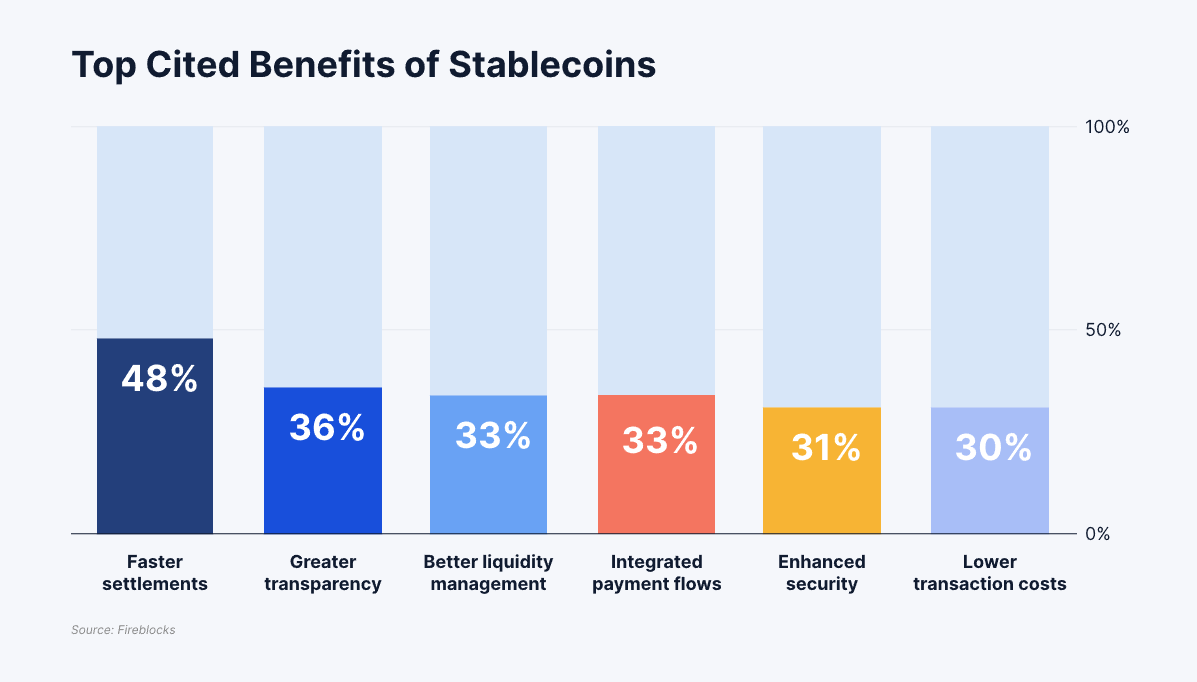
Fireblocks’ research shows that 48% of institutions cite speed as the top benefit of stablecoins, ranking higher than cost savings. Respondents were 1.5× more likely to value speed over fees.
Applications that depend on stablecoin data include:
- Wallets showing balances and transaction history
- DeFi dashboards tracking liquidity and flows
- Trading platforms and bots reacting to transfers in real time
- Compliance, monitoring, and reporting systems
- AI agents executing strategies based on live on-chain signals
If these systems fall even seconds behind, they break user trust or fail financially.
Why RPC calls are not enough
JSON-RPC endpoints were not designed for real-time financial workloads.
RPC nodes are optimized for block propagation and state reads, not for:
- Filtering historical events
- Aggregating large datasets
- Serving high-frequency queries
- Maintaining consistent performance under bursty traffic
As stablecoin usage scales into cross-border payments, treasury automation, and institutional settlement, RPC-based access becomes a bottleneck.
This is why blockchain indexing is foundational infrastructure, not a convenience layer.
So what is a Subgraph?
A subgraph is a smart contract indexer that transforms raw blockchain data into structured, queryable data.
When building a subgraph, developers define:
- Which smart contracts to monitor
- Which events to index
- How events are transformed into entities
- How the indexed data can be queried
Once deployed, the subgraph continuously processes new blocks and updates its dataset as the chain progresses.
For stablecoins, this enables indexing of:
- Transfer events
- Mint and burn activity
- Account balances
- Supply changes over time
- Historical and real-time activity
Instead of parsing logs manually, applications query a fast, deterministic API.
Why Subgraphs are ideal for Stablecoin data
Subgraphs are particularly well-suited for stablecoin workloads because they provide:
- Real-time updates as new blocks are produced
- Historical queries across arbitrary time ranges
- Filtering and aggregation that RPC nodes cannot support
- Deterministic schemas for dashboards and automation
In practice, subgraphs act as the operational data layer for blockchain finance, while the blockchain itself remains the source of truth.
How real-time stablecoin indexing works
At a high level, indexing stablecoin data with a subgraph involves:
- Connecting the subgraph to the stablecoin contract address
- Listening for events such as Transfer, Mint, and Burn
- Transforming events into entities like Account, Transfer, and Token
- Serving the indexed data through a real-time query endpoint
As new blocks arrive, the indexer processes them immediately and updates the dataset.
Applications can query this data continuously without managing block parsing, log decoding, or chain reorganization logic.
Read more about why indexing is key to performance.
The challenges with real-time stablecoin indexing
Running stablecoin indexing at scale introduces real infrastructure challenges:
- High transaction volume during market volatility
- Chain reorganizations that invalidate recent blocks
- Bursty traffic that overwhelms cloud-only systems
- Silent lag where data appears available but is no longer aligned with the chain head
Fireblocks’ report highlights a key shift: execution matters more than experimentation. 86% of firms report their infrastructure is “ready” for stablecoins. What differentiates winners now is performance under load.
How Ormi supports real-time stablecoin Subgraphs
Ormi provides 0xGraph, a next-generation subgraph indexing platform designed for real-time blockchain data.
Teams use Ormi to:
- Deploy stablecoin subgraphs without modifying existing Graph specifications
- Index data in real time while staying aligned with the chain head
- Handle high throughput without throttling
- Maintain stability during traffic spikesRely on built-in reorg handling and observability
This makes Ormi well-suited for stablecoin-heavy workloads such as wallets, trading platforms, dashboards, and automated systems.
Common stablecoin use cases powered by Subgraphs
Real-time stablecoin subgraphs are commonly used to:
- Track USDT and USDC transfers across accounts
- Monitor minting and burning activity
- Power wallet balance views and transaction histories
- Build real-time dashboards and alerts
- Feed trading bots and AI agents with fresh on-chain data
- Support compliance and reporting workflows
Because the data is indexed and structured, these use cases scale without adding operational complexity.
When should you use a Subgraph for stablecoin data?
A subgraph is the right choice if your application requires:
- Real-time updates
- Historical queries
- Structured smart contract data
- Reliable performance under load
If your application only needs occasional reads, direct RPC calls may be sufficient. For anything user-facing, automated, or financial, indexed blockchain data is foundational infrastructure.
Frequently asked questions
How do I get real-time stablecoin transfer data?
By indexing the stablecoin contract with a subgraph that listens to transfer and supply events and exposes them through a real-time query API.
Are RPC calls enough for stablecoin data?
RPC calls work for simple reads, but they do not scale for real-time balances, histories, or analytics.
What is the best way to index stablecoin data in production?
Production workloads require subgraph infrastructure with reorg handling, high throughput, and continuous synchronization, such as Ormi’s 0xGraph.
Learn more
If you want to go deeper, these guides build on this pillar:
- How Web3 apps query smart contract data in real time
- What is blockchain indexing: types and limitations
- How to choose the best Web3 data indexer: subgraphs, APIs, and real-time blockchain data
- How to deploy and query a USDT0 subgraph using Ormi’s 0xGraph
Conclusion
Accessing real-time stablecoin data is not about fetching individual transactions. It requires infrastructure that can continuously index blockchain data, handle reorganizations, and serve structured queries at scale.
Subgraphs are the most effective way to index and query stablecoin data in real time. With platforms like Ormi, teams can deploy production-grade stablecoin subgraphs without managing complex indexing infrastructure.
If your application depends on accurate, real-time smart contract data, indexing is not optional. It is foundational.
About Ormi
Ormi is the next-generation data layer for Web3, purpose-built for real-time, high-throughput applications like DeFi, gaming, wallets, and on-chain infrastructure. Its hybrid architecture ensures sub-30ms latency and up to 4,000 RPS for live subgraph indexing.
With 99.9% uptime and deployments across ecosystems representing $50B+ in TVL and $100B+ in annual transaction volume, Ormi is trusted to power the most demanding production environments without throttling or delay.